











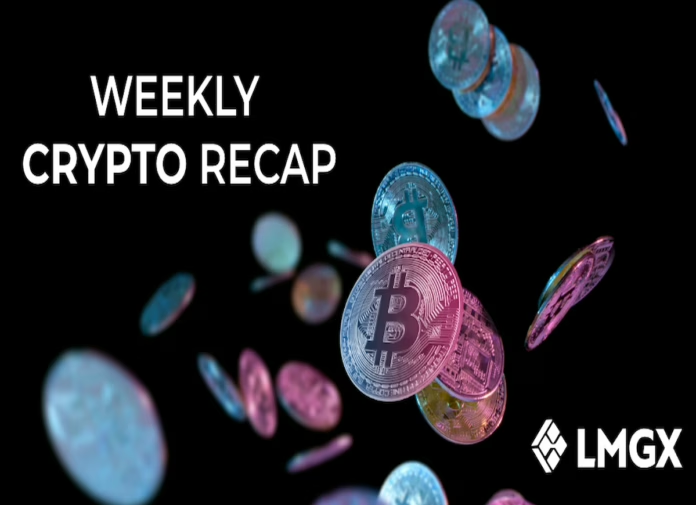
The second week of April 2026 has been a study in crypto’s growing maturity — but not a clean break from macro. Early in the week, the collapse of U.S.-Iran talks and the blockade of Iranian ports reignited energy-market fears and broader risk aversion. By Friday, however, hopes of renewed diplomacy had pushed oil back below $100 and improved sentiment across risk assets, including crypto. At the same time, the SEC delivered a meaningful, though narrower-than-headlines-suggested, statement on certain crypto interfaces.
Crypto Market Snapshot: Bitcoin Leads While Ethereum Consolidates
Bitcoin remains the market’s anchor. It held up better than many feared during the early-week geopolitical shock, then extended higher as macro sentiment improved. Ethereum also recovered, but it is still trading more like a consolidating large-cap than a clear market leader. Across the broader market, the global crypto market cap is about $2.66 trillion, with Bitcoin dominance at 57.2% and Ethereum dominance at 10.7%, reinforcing the idea that BTC is still setting the tone.
Weekly Performance at a Glance
Spot prices are current as of April 17. Approximate 7-day changes below use April 10 closes as the baseline rather than a settled weekly close.
| Asset | Price Now | 7D Move |
|---|---|---|
| Bitcoin (BTC) | $75,710 | +3.8% |
| Ethereum (ETH) | $2,354 | +4.9% |
| Solana (SOL) | $88.52 | +4.4% |
| XRP | $1.45 | +6.6% |
On that basis, XRP has been the strongest of the four names above, while BTC continues to dominate narrative leadership through market share and resilience. ETH and SOL have recovered, but both still look like catch-up trades rather than clear leadership plays.
The Big Story: SEC’s “Green Light” Needs a Footnote
The week’s biggest policy development came from Washington. On April 13, the SEC’s Division of Trading and Markets issued a staff statement on certain “Covered User Interface Providers” involved in preparing transactions in crypto asset securities. In practical terms, the staff said it would not object to certain neutral, non-discretionary interfaces operating without broker-dealer registration if they meet a long list of conditions around neutrality, disclosure, compensation, routing, and control.
That is meaningful for wallets and DeFi front ends, but it is not a blanket “DeFi green light.” The SEC explicitly says the statement is an interim staff view, not a Commission rule, has no legal force or effect, and would be withdrawn in five years absent further Commission action. So the regulatory mood improved this week, but the safer takeaway is targeted relief and added clarity, not full legal certainty.
Narratives on Crypto Traders’ Radar
Some of the same themes remain in focus, but a few numbers needed updating. Hyperliquid (HYPE) is still one of the strongest exchange-linked stories in crypto, trading around $43.64 with a market cap near $11.15 billion. Separately, The Block reported that open interest on Hyperliquid’s HIP-3 markets topped $2 billion last week, underscoring continued demand for always-on, on-chain derivatives exposure.
Bittensor (TAO) remains one of the more closely watched AI-linked tokens, but it is no longer trading near $310. Current pricing is around $253.72, after a volatile stretch that included a $309.57 close on April 9 and a $257.31 close on April 10. That keeps the AI narrative alive, but with more caution than the original draft implied.
Meanwhile, the oil shock has also reminded traders that tokenized real-world exposure can come back into view quickly when macro markets become unstable. That does not mean “tokenized oil” has become a mainstream crypto trade overnight, but it does reinforce how closely crypto narratives now interact with commodities, rates, and geopolitics.
The Macro Backdrop: Oil, Inflation, and the Fed
It is impossible to discuss crypto this week without discussing energy. Early-week tensions followed the breakdown of ceasefire talks and the U.S. move to blockade Iranian ports, which tightened the macro backdrop and pushed traders back into headline-watching mode. By Friday, though, Brent had fallen to about $96.31 and WTI to $91.33 as diplomatic hopes improved, even though the Strait of Hormuz remained heavily disrupted.
Inflation also remains part of the story. The latest U.S. CPI release showed March CPI at 3.3% year over year, with core CPI at 2.6%. March PPI rose 0.5% month over month, with final-demand energy prices up 8.5%. In other words, crypto is currently benefiting from relief in geopolitical sentiment, but it is still operating in a macro environment where inflation and rates remain very relevant.
Looking Ahead: The April 22 Crypto Marker
The next key date is still April 22, when the current ceasefire window is due to expire. That does not guarantee a market break, but it keeps geopolitical headline risk firmly on the calendar. At the same time, U.S. crypto policy remains a secondary driver: the SEC’s staff statement has improved the tone, while broader market-structure debate around the CLARITY Act remains part of the background discussion in Washington.
| Watch Item | Why It Matters |
|---|---|
| April 22 ceasefire marker | Renewed tension could hit risk appetite fast |
| Oil below $100 | Helpful for sentiment, but still fragile |
| SEC staff stance | Supportive, but temporary and conditional |
| BTC vs. alts | BTC still leads the market structure story |
For altcoins specifically, the near-term question is less about hype and more about follow-through. SOL is still below $100, ETH is still in consolidation mode, and XRP has quietly outperformed this week’s spot snapshot.
Final Thoughts
The core theme of the week is not full decoupling — it is measured resilience. Crypto absorbed an early macro shock, benefited from late-week de-escalation hopes, and got a real but limited policy tailwind from the SEC. Bitcoin still looks like the market’s cleanest expression of strength, while the broader altcoin complex remains selective and headline-sensitive.
Disclaimer: This article is for informational purposes only and does not constitute financial advice. Always do your own research before investing in volatile assets.