













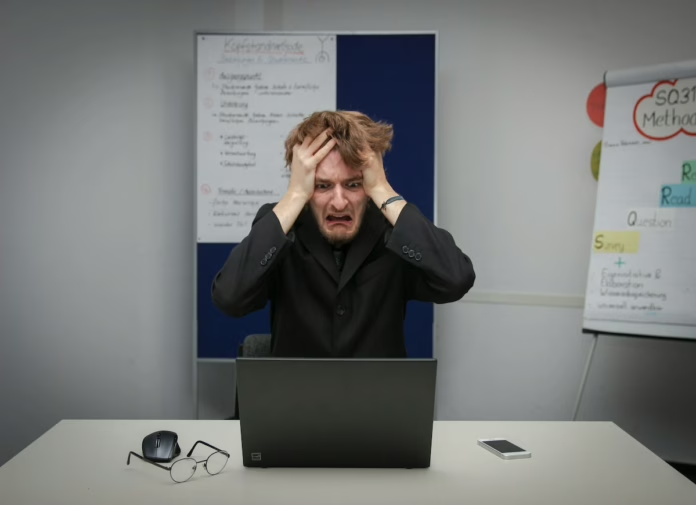
For many traders, the allure of the 24/5 Forex market is the constant opportunity. However, that same accessibility often leads to a hidden performance drain: trading burnout. Unlike a physical injury, mental fatigue is a silent account killer that erodes your discipline long before you realize your “edge” is gone.
In this guide, we explore why doing less is often the secret to earning more and how to reclaim your mental clarity.
1. The Anatomy of the 24/5 Trading Grind
Burnout in Forex isn’t just about feeling tired; it is a physiological shift. When you are overtaxed, your prefrontal cortex (the seat of logic and strategy) shuts down, handing the wheel to your amygdala (the fear and survival center).
- The “Always-On” Fallacy: Checking MT5 at dinner or in bed prevents your brain from entering the “Default Mode Network”—the state necessary for creative problem-solving and recovery.
- Decision Fatigue: Every candle flicker demands a micro-decision. Scientifically, your ability to stick to a trading plan at 3:00 PM is significantly lower than it was at 8:00 AM.
2. Why “Less is More”: The Law of Diminishing Returns
The most profitable traders understand a fundamental truth: The quality of your setups is more important than the quantity of your executions.
- The Sniper vs. The Machine Gunner: A sniper waits hours for a single high-probability shot. A machine gunner wastes ammunition (capital) and energy on every movement. In trading, “ammunition” is your mental energy and your balance.
- A+ vs. C- Setups: Taking two “A+” setups per week is mathematically superior to taking twenty “C-” setups. Fewer trades result in lower spreads, less emotional “slippage,” and higher win rates.
3. Practical Strategies to Combat Mental Fatigue
To protect your mental capital, you must treat trading like a professional sport where recovery is mandatory.
The “Session Sandbox” Method
Stop trying to trade the entire world. Select one specific window—such as the London Open or New York Open—and trade for only 2–3 hours. When the session ends, close the laptop. The market will be there tomorrow.
The “Digital Sabbath”
From Friday evening to Sunday afternoon, disconnect entirely. Delete trading apps or move them to a hidden folder. Engaging in “analog” hobbies—exercise, reading, or nature—resets your dopamine receptors and prevents “chart blindness.”
Environmental Design
Your physical environment dictates your mental state. A cluttered desk with six monitors can trigger a “fight or flight” response. A clean, minimalist workspace promotes flow and reduces the cortisol spikes associated with high-stakes decision-making.
4. The Burnout Checklist: When to Step Away
If you check more than three of the following boxes, you are likely suffering from trading fatigue and should stop trading for at least 48 hours:
- You are entering trades out of boredom, not valid setups.
- You feel physical tension (jaw clenching, headaches) while watching charts.
- You are losing sleep to monitor the Asian session move.
- A small loss feels like a personal insult or a catastrophe.
- You find yourself “praying” for a price reversal.
5. Conclusion: Reframing Rest as a Performance Tool
In professional athletics, recovery is as vital as the workout itself. In the financial markets, your brain is your only muscle. If you don’t allow it to recover, it will eventually fail you during a high-stakes moment.
Shift your perspective: Stepping away from the screen isn’t “missing out”—it’s an investment in your next profitable trade. By mastering the art of doing less, you ensure that when you do trade, you are doing so with maximum precision.