













The countdown may soon begin for one of the most anticipated events in both the investment and aerospace worlds: SpaceX, Elon Musk’s private space exploration company, is reportedly preparing for an initial public offering (IPO) in 2026.
With whispers of a $1.5 – $1.75 trillion valuation and plans to list on Nasdaq, this IPO could redefine what it means to invest in technology, aerospace, and humanity’s long – term future.
This article provides a deep dive into SpaceX’s history, financial structure, market positioning, IPO strategy, and what investors and space enthusiasts should expect.
A Brief History of SpaceX
Founded in 2002, SpaceX started with an audacious mission: make space travel more affordable and eventually enable humans to become a multi – planetary species.
SpaceX has achieved several historic milestones since its founding.
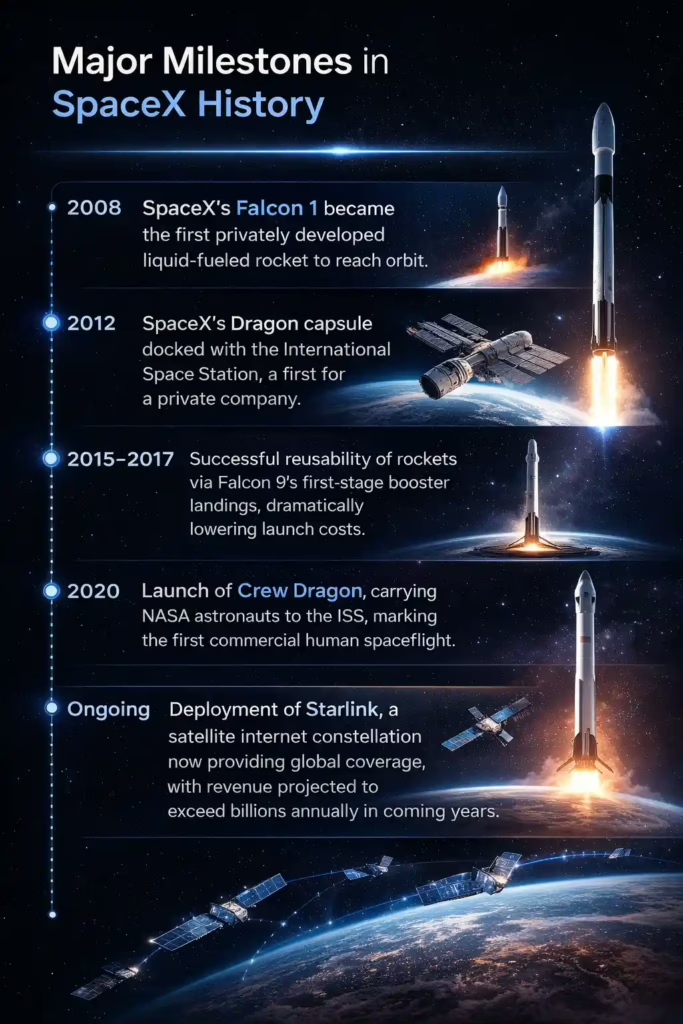
In 2008, the company’s Falcon 1 became the first privately developed liquid – fueled rocket to reach orbit.
In 2012, the Dragon capsule successfully docked with the International Space Station, marking the first time a private company accomplished this feat.
Between 2015 and 2017, SpaceX revolutionized the space industry by landing and reusing Falcon 9 rocket boosters, dramatically reducing launch costs.
In 2020, the Crew Dragon spacecraft carried NASA astronauts to the ISS, becoming the first commercial human spaceflight mission.
Meanwhile, SpaceX continues to expand Starlink, its global satellite internet network, which now provides worldwide coverage and is projected to generate billions in annual revenue.
The company has achieved milestones previously thought impossible for a private entity:
SpaceX has also developed the Starship program, designed for interplanetary travel. Starship’s completion could make Mars colonization feasible, aligning with Elon Musk’s long – term vision.
SpaceX’s Funding Journey: From Private Rounds to IPO
For decades, SpaceX remained private, relying on funding from both government contracts and private investors. Notable funding rounds include:
- 2008 – 2012: Early seed and Series A funding, largely from Elon Musk’s own wealth, along with NASA launch contracts.
- 2015 – 2020: Large private funding rounds that raised billions, including from venture capital and strategic partners like Google and Fidelity.
- 2022 – 2025: Late – stage private rounds pushing valuations above $125 billion, primarily fueled by Starlink revenue potential and the promise of Starship.
Despite growing revenue streams, SpaceX avoided a public offering, partly to maintain operational flexibility. Going public now suggests a strategic pivot: access to massive capital markets to accelerate ambitious projects.
The Case for a SpaceX IPO
1. Enormous Capital Needs
SpaceX’s long – term goals – Starship development, Mars colonization, and global Starlink expansion – require billions in capital. An IPO would raise unprecedented funds while providing liquidity to early investors.
2. Investor Appetite
Reports suggest that the IPO could attract institutional and retail investors alike, given SpaceX’s combination of technological innovation, potential recurring revenue, and Elon Musk’s high – profile leadership.
3. Market Timing
The market has shown increasing enthusiasm for space – related investments, with satellite internet, space tourism, and defense contracts driving investor interest. SpaceX’s IPO could capitalize on this momentum.
Financial Snapshot and Revenue Streams
While SpaceX is private and exact financials are not public, analysts estimate:
- Launch Services: Falcon 9 and Falcon Heavy launch contracts generate billions annually, with commercial, governmental, and defense clients.
- Starlink: Subscription – based satellite internet service is expanding rapidly, with global coverage now available and future projections of $20 – 30 billion annual revenue.
- R&D Ventures: SpaceX is exploring AI, orbital manufacturing, and satellite – based data services, positioning the company for long – term high – margin revenue.
Total projected valuation for the IPO ranges from $1.5 to $1.75 trillion, potentially making it one of the largest IPOs in history.
IPO Structure: What to Expect from SpaceX
SpaceX is reportedly considering a Nasdaq IPO with potential strategies including:
- Partial Share Offering: Releasing only a fraction of total shares to maintain Elon Musk’s control.
- Nasdaq 100 Inclusion: Early index listing could drive institutional demand and boost liquidity.
- Revenue Highlighting: Emphasis on recurring Starlink revenue to appeal to cautious investors seeking stability.
While no official filing has been made, the anticipated mid – 2026 timeline aligns with SpaceX’s development schedule and market conditions.
Opportunities for Investors of SpaceX
Investing in SpaceX provides access to a company at the forefront of multiple sectors:
- Space Exploration: Starship and Mars colonization projects could redefine humanity’s economic frontier.
- Satellite Internet: Starlink provides recurring revenue, long – term growth potential, and global impact.
- Defense and Government Contracts: Stable, high – margin revenue streams reduce volatility.
- Technological Leadership: Exposure innovations in reusable rockets, orbital manufacturing, and potential AI applications in space.
Risks and Considerations
Despite enormous potential, SpaceX carries significant risks:
- Operational Complexity: Launch failures or Starship delays could affect stock performance.
- Regulatory Scrutiny: Public listing brings reporting requirements that may constrain long – term planning.
- Market Volatility: Capital – intensive projects are sensitive to macroeconomic conditions.
- Elon Musk Factor: While his vision drives growth, controversies and public perception can influence investor’s sentiment.
The Broader Impact on the Space Industry
A SpaceX IPO would likely have far – reaching consequences:
- Validation of Commercial Space: Public investors endorsing SpaceX would signal confidence in the space economy.
- Inspiration for Competitors: Companies like Blue Origin, Rocket Lab, and Relativity Space may pursue IPOs.
- Transparency and Insight: Public disclosure could reveal previously opaque economics of space ventures.
- Acceleration of Global Initiatives: More capital may allow faster expansion of Starlink, interplanetary missions, and AI – based space applications.
Comparing SpaceX to Other Mega – IPOs
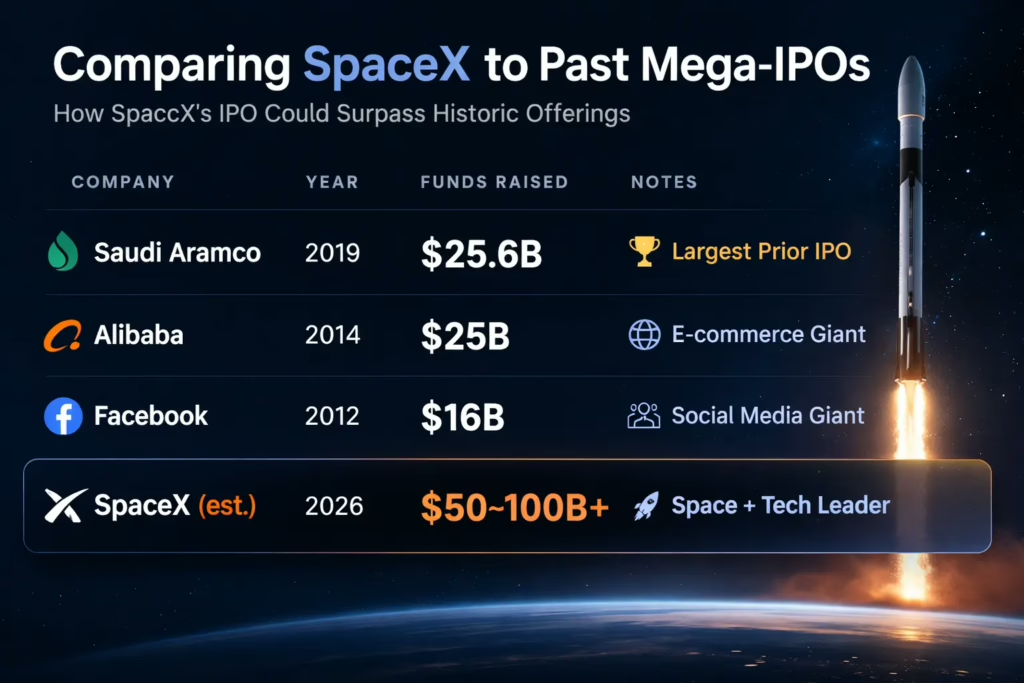
Historically, mega – IPOs like Alibaba ($25B), Saudi Aramco ($25.6B), and Facebook ($16B) dominated headlines.
SpaceX could dwarf these offerings if projections hold:
Elon Musk’s Vision and Strategic Shift
Elon Musk has resisted public offerings for decades, citing the need to maintain control and avoid quarterly pressures. This IPO indicates a willingness to balance:
- Operational Control: Musk may retain a majority stake to guide long – term projects.
- Capital Access: Public funds accelerate Starship development, Starlink expansion, and ambitious interplanetary projects.
- Global Influence: A public SpaceX positions Musk as a central figure in both finance and the space economy.
Conclusion: A Historic Event in Finance and Space
SpaceX’s potential IPO represents more than a financial transaction; it is a cultural and technological milestone. Investors will have the chance to participate in the growth of a company redefining space exploration, global communications, and high – tech innovation.
While mid-2026 is tentative, the excitement is palpable.
Between Starship launches, Starlink subscriptions, and Musk’s ambitious vision, the world will be watching closely.
The SpaceX IPO could become one of the largest and most influential public offerings in history, blending high finance with humanity’s next great frontier.