












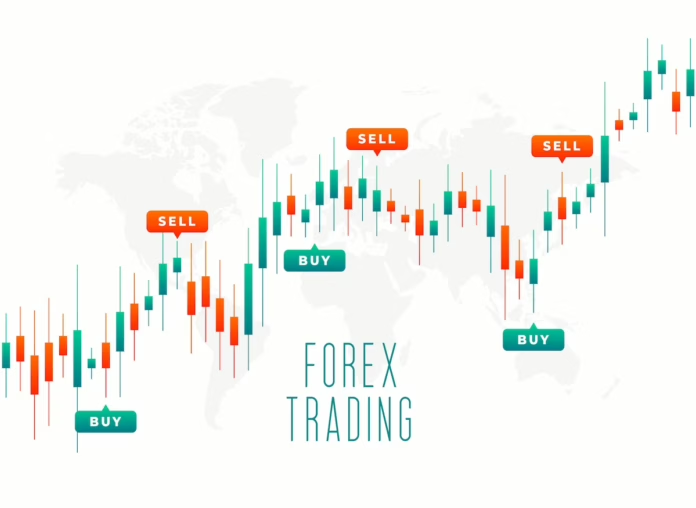
In the fast-paced world of trading, few events are as dramatic or as profitable for prepared traders as a Short Squeeze.
While the term is often associated with the stock market (like the famous GameStop or Bumble surges), the mechanics play a vital role in the Foreign Exchange (Forex) market as well.
Understanding how a short squeeze works can help you avoid being caught on the wrong side of a massive price spike and teach you how to capitalize on the momentum.
What is a Short Squeeze?
A Short Squeeze occurs when a currency pair that has been heavily “shorted” (sold by traders expecting the price to fall) suddenly starts to rise.
As the price climbs, traders who hold short positions face mounting losses. To exit their trades and limit their risk, they must buy the currency back.
This wave of “forced buying” adds fuel to the fire, pushing the price even higher and faster, which in turn “squeezes” more short sellers out of the market.
The Anatomy of a Squeeze in Forex
In Forex, a squeeze usually follows a specific pattern:
- Heavy Bearish Sentiment: A currency pair (e.g., EUR/USD) has been in a long-term downtrend. Most retail and institutional traders are “short,” expecting the trend to continue.
- The Trigger: An unexpected catalyst occurs—such as a positive economic data release, a surprise central bank announcement, or a technical break above a major resistance level.
- The Exit Chain Reaction: As the price hits the Stop-Loss orders of short-sellers, those orders execute as “Buy” market orders. This surge in buying volume creates a vertical price spike.
- The Peak: The move continues until the pool of short sellers is exhausted. Once there is no one left forced to buy, the price often stabilizes or retraces just as quickly.

How to Identify a Potential Short Squeeze
Traders look for specific signals to anticipate a squeeze:
Sentiment Indicators
Tools like the Speculative Sentiment Index (SSI) or Commitment of Traders (COT) reports show if the market is “overcrowded” on the short side. If 80-90% of traders are short, the market is ripe for a squeeze.
Support & Resistance Levels
Look for “clusters” for stop-loss orders. These are usually located just above recent swing highs or psychological round numbers.
Divergence
If the price is making new lows, but momentum oscillators (like the RSI) are moving up, it suggests the bearish momentum is fading.
Trading the Strategy
| Step | Action |
| 1. Spot the Crowd | Find a pair that has been trending down for a long time and is showing signs of exhaustion. |
| 2. Wait for the Trigger | Do not jump early. Wait for a high-volume break above a key resistance level. |
| 3. Entry | Enter a Long position once the “squeeze” starts. The goal is to ride the momentum of the panicked short sellers. |
| 4. Exit | Use trailing stops. Squeezes are often volatile and can reverse once the “buying vacuum” ends. |
The Risks
A short squeeze is a high-volatility event. While the gains can be rapid, the market can be extremely erratic.
Slippage (when your order is filled at a different price than expected) is common during these spikes because the market moves too fast for liquidity to keep up.
Conclusion
A short squeeze is essentially a “liquidity crisis” for bears. For a Forex trader, it represents a unique opportunity to catch a high velocity move in a short period. By monitoring market sentiment and key technical levels, you can transform a moment of market panic into a calculated trading advantage.