'/%3E%3C/svg%3E)
'/%3E%3Cpath%20fill='%23b2b2b2'%20d='M241%20382q0%2016%2017%2026%2017%2011%2042%2011t42-11q16-11%2017-26V269H241'/%3E%3Cpath%20fill='%239f7e00'%20d='M241%20379q0%2014%208%2023%209%209%2021%209%2014%200%2021-9%209-9%209-23V269h-59'/%3E%3Cpath%20d='M241%20339v-70h59v110q0%2014-9%2023l-6%205v-68h-15v72q-8%200-14-4v-68zm59%2040c0%2022%2015%2032%2029%2032%2021%200%2030-18%2030-32v-40h-59'/%3E%3Cpath%20fill='%239f7e00'%20d='M266%20277v5h2v12h-3v-5h2v-5h-9v5h2v5h-4v9h3v18h-5v10h34v-10h-5v-18h3v-9h-4v-5h2v-5h-9v5h2v5h-3v-12h2v-5zm42%20101q0%2010%206%2017%206%206%2015%207%2010-1%2016-7%206-7%206-17v-29h-43'/%3E%3Ccircle%20fill='%230044ad'%20cx='329.5'%20cy='372'%20r='6'/%3E%3Cellipse%20fill='%230044ad'%20cx='300'%20cy='340'%20rx='16'%20ry='21'/%3E%3C/svg%3E)
'/%3E%3C/g%3E%3Cuse%20href='%23c'%20transform='matrix(-1%200%200%201%20720%200)'/%3E%3C/svg%3E)












Who Are Crypto Whales?
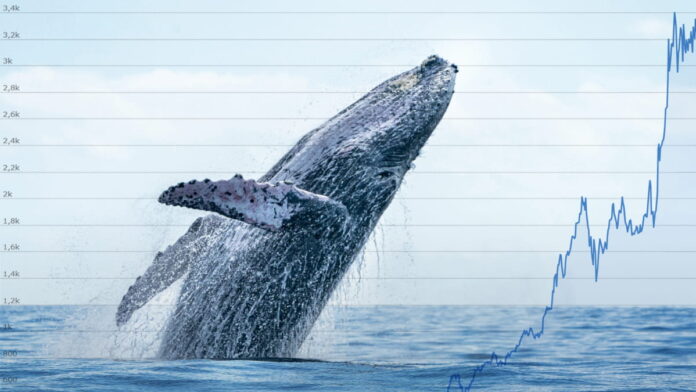
In the world of cryptocurrency, the term “whale” refers to individuals or entities that hold exceptionally large amounts of a digital asset. These can include early investors, crypto funds, hedge funds, exchanges, or miners. There is no strict cutoff, but a whale is generally someone who can significantly influence the market with a single transaction. For example, owning 1,000 or more Bitcoins would qualify someone as a whale. In smaller altcoins, even holdings worth a few million dollars can have the same effect. The presence of whales makes crypto markets unique compared to traditional stock markets. They often operate strategically, using their large holdings to execute trades that smaller investors cannot.
How Whale Trading Works
Whales do not usually buy or sell their entire holdings at once because that would drastically move the market. Instead, they use strategies like accumulation and distribution. Accumulation involves slowly buying a cryptocurrency over time to avoid raising its price. Distribution is the reverse, selling portions of holdings in a way that doesn’t trigger panic among smaller investors. Whales may also use complex tactics like spoofing, placing large fake orders to influence the market, or stop-loss hunting, pushing prices just enough to trigger automated sell orders. Understanding these strategies can help retail traders anticipate potential market movements. Essentially, whales operate like chess players, thinking several moves ahead.
Understanding Liquidity in Crypto Markets
Liquidity refers to how easily an asset can be bought or sold without causing significant price changes. High liquidity means trades have minimal impact on price, while low liquidity makes the market highly sensitive. Crypto whales exploit liquidity to influence the market. In coins with low liquidity, even moderate trade from a whale can trigger sharp price swings. Large-cap coins like Bitcoin have higher liquidity, so whales must employ subtler tactics. Monitoring liquidity is essential for traders, as it indicates how vulnerable a coin is to whale manipulation. The dynamics of liquidity directly determine how whales structure their trades.
Whale Wallets and On-Chain Tracking
Whales typically hold their assets in a small number of wallets, which are often publicly visible on the blockchain. Tools like block explorers allow anyone to track large movements, although the identity behind a wallet usually remains anonymous. Many traders watch these wallets to detect potential market shifts. For instance, a sudden transfer of Bitcoin from a private wallet to an exchange could signal an upcoming sell-off. Similarly, accumulation in a wallet may hint at a potential price surge. By tracking on-chain data, retail traders attempt to “follow the money” without directly copying a whale move. This transparency is unique to blockchain-based markets and adds a strategic layer to trading.
Market Manipulation Techniques
Whales have several ways to influence prices, especially in low-cap coins. Pump and dump schemes involve rapidly buying a coin to inflate its value, then selling for profit once retail investors jump in. Wash trading can create fake trading volume to make a coin appear more popular than it is. Spoofing tricks the market by placing large orders and then canceling them to manipulate perception. Even in high-cap coins, whales can indirectly move the market by causing panic or triggering automated trading bots. These techniques exploit market psychology and the thin liquidity of crypto markets. Understanding these tactics helps traders avoid falling into traps.
Whale Alerts and Monitoring Tools
Modern traders often rely on whale alert tools to track large transactions in real time. Services on social media platforms, Telegram, or dedicated websites notify users when wallets move significant amounts. While not every transaction results in market movement, these alerts help anticipate trends. Traders can gauge whether a whale is accumulating or preparing to sell. Combining whale alerts with liquidity and volume analysis provides a clearer picture of market sentiment. However, it is important to remain cautious, as not all whale activity is intended to manipulate prices. Alerts are a signal, not a guarantee, of future movement.
How Retail Traders Interact with Whales
Most individual traders cannot match the volume of whales, so they must adapt differently. Some attempt to follow whale behavior by monitoring on-chain movements or exchanging inflows. Others focus on coins with higher liquidity to reduce the impact of whale trades. Smart traders avoid panicking during sudden price swings, which are often caused by whale activity. Education about whale strategies can prevent costly mistakes. By understanding how whales operate, retail traders can better time entries and exits without blindly copying large trades. Essentially, knowledge is the best defense against whale-induced volatility.
The Bigger Picture: Whales and Market Health
While whales are often seen as manipulators, they are also a natural part of crypto markets. Their presence provides liquidity and can even stabilize prices during high volatility. In highly liquid markets like Bitcoin or Ethereum, whales tend to act strategically rather than recklessly. For smaller coins, however, they can dominate the market and create wild swings. Observing whales helps traders understand market sentiment, liquidity patterns, and potential risk. Ultimately, whales highlight the unique blend of transparency and unpredictability in cryptocurrency trading. Understanding their role is essential for anyone serious about navigating the crypto space.